Gut Health
The Best Supplements for Gut Health, and the Question Most of Them Can't Answer
Every product here promises to fix your gut. Almost none of them will tell you which measurement they moved.
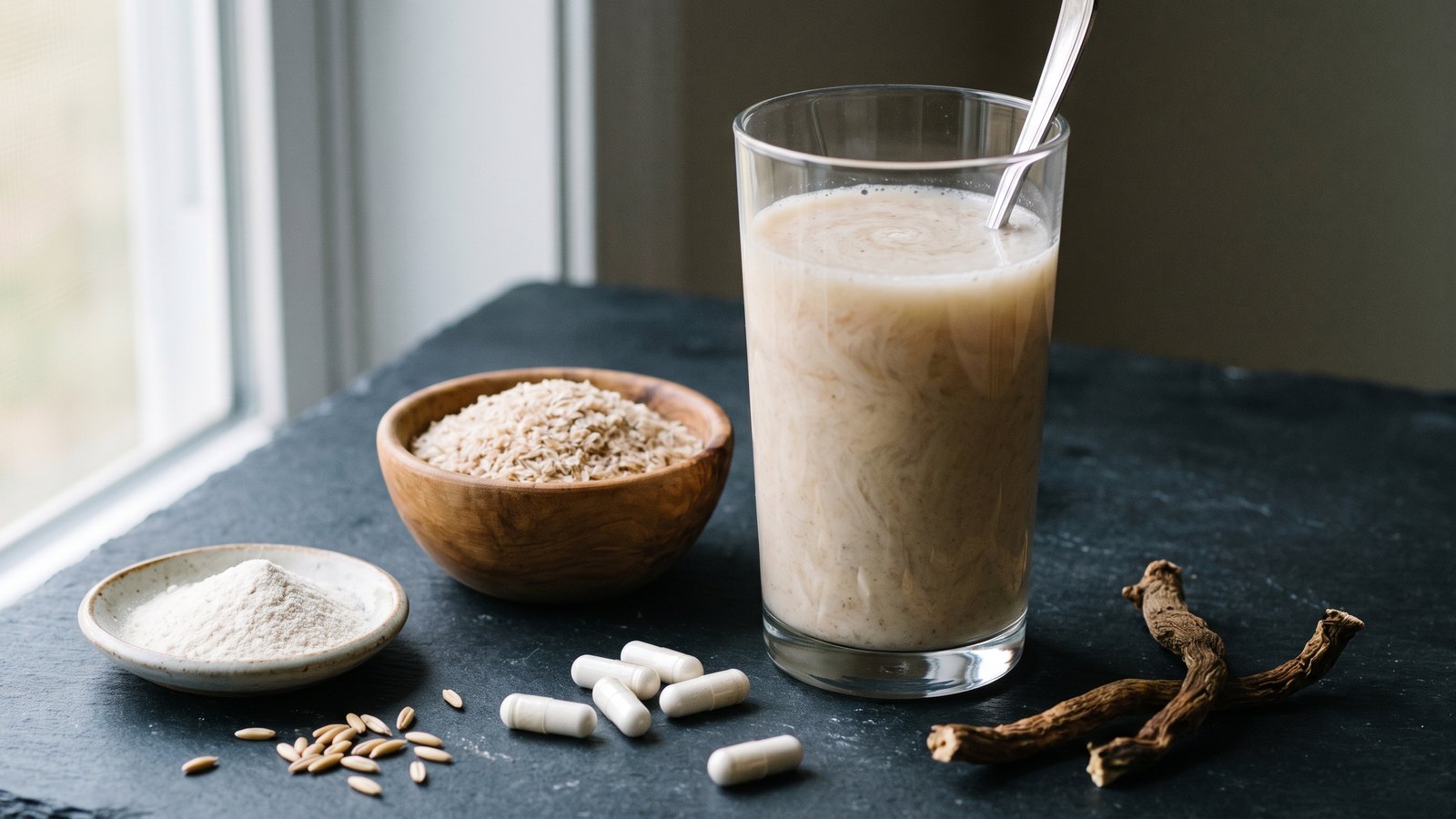
"Gut health" is the loosest phrase on the supplement shelf. It sounds like a single condition you either have or don't, and it gets printed on products that do wildly different things to wildly different parts of your digestion.
Researchers can't use a word that vague, so they don't. They measure specific things: stool consistency, transit time, the abundance of one bacterial genus, short-chain fatty acid levels in stool, a symptom score for bloating and gas. Every trial in this article measured at least one of those.
Which sets up the sorting question for this whole category. When a label says it supports gut health, which of those numbers is it talking about, and did anyone check?
Start with the finding that should be on every probiotic box
Kristensen and colleagues went looking for exactly that. They systematically reviewed randomized controlled trials of probiotic supplementation in healthy adults, restricted to studies that sequenced the fecal microbiota rather than guessing at it. Seven trials met the bar, and the quality was rated medium to high.
The result: no effect on fecal microbiota composition against placebo. Not on diversity, not on richness, not on evenness. One study out of seven found a shift in the overall structure of the bacterial community (Genome Medicine 2016).
That is the honest ceiling on "reseeds your gut" language for people who aren't sick. It doesn't mean probiotics do nothing, and it doesn't say anything about people with a diagnosed condition. It means the specific claim most probiotic marketing rests on, that swallowing bacteria rearranges the population living in you, has not held up in healthy volunteers.
How we ranked these
Same five axes we use site-wide: hunger-pathway coverage, dose transparency, evidence quality, best available cost per serving, and format and timing fit. The rubric lives in our methodology.
One extra filter for this list. A product only counts if a human trial measured a gut outcome directly: stool form or frequency, transit time, bacterial abundance, short-chain fatty acids, or a validated GI symptom score. Body weight doesn't count. Blood glucose doesn't count. Both get quietly recruited as evidence of gut benefit, and neither is.
1. Psyllium: the boring one with the most measurements behind it
Jalanka and colleagues ran two randomized, placebo-controlled, double-blinded trials, 7 days of psyllium against maltodextrin, in 8 healthy volunteers and 16 constipated patients. In healthy adults the microbial shift was small but real. In the constipated group the changes were larger, acetate and propionate levels moved, and increases in three known butyrate-producing genera tracked with increased fecal water (International Journal of Molecular Sciences 2019).
Yang and colleagues went at the same question in 54 chronically constipated women of reproductive age, comparing psyllium husk against placebo with 16S sequencing. Symptoms improved, the microbiota composition differed from placebo, and network analysis showed tighter clustering of bacterial groups in the psyllium arm (Aging 2021).
Then the biggest and least flattering one. Lai and colleagues randomized 250 adults with functional constipation across five arms for 4 weeks: polydextrose, psyllium husk, wheat bran plus psyllium, a two-strain probiotic, or maltodextrin placebo. There was no time-by-group effect on bowel movement frequency or straining. What did move was stool consistency, with Bristol scores rising 0.95 to 1.05 in all four active arms and not changing significantly in placebo (Gut Microbes 2023).
Read those three together and you get an unusually specific answer. Psyllium reliably changes what your stool is like. It does not reliably change how often you go. Products in this aisle almost always sell the second thing.
Metamucil delivers 3.4 g of psyllium husk per serving at about $0.21, which makes it the cheapest thing on this page by a distance and the only one where scaling the dose up is financially trivial. Our psyllium deep dive covers the tolerance ramp, which matters more than people expect.
2. Fermentable fiber blends: right ingredients, unverifiable amounts
Supergut is built on resistant potato starch, oat beta-glucan, green banana resistant starch and soluble maize fiber, 6.5 g of fiber a serving at $1.50. Those are legitimate, well-studied fiber types, and this is the closest thing here to a deliberate feed-your-bacteria product.
Two findings should shape how you expect it to behave.
DeMartino and colleagues ran a randomized crossover feeding study in 50 adults, swapping in one potato-based side dish a day against refined grains. The potato dishes changed the gut microbiota, including a rise in a butyrate-producing group, and fecal butyrate levels did not change (Nutrients 2022). A microbiome that looks different on a sequencer is not the same as a microbiome producing more of the metabolite you wanted.
Costabile and colleagues tested soluble corn fiber at 6, 12 and 18 g of fiber a day for 14 days. Bifidobacteria rose most on the lowest dose, and the increase there matched the size of shift seen with recognized prebiotics (PLOS One 2016). Small groups, short duration, so don't over-read it. But it points the opposite way from how these products are sold, which is that a bigger scoop buys a bigger effect.
The blend is the real problem with Supergut. Every individual dose sits inside a proprietary total, so there's no way to check any of it against a study. Dose is the only thing connecting a product to research, and hiding it turns the ingredient list into a reading list. Our chicory inulin write-up gets into how fermentable fibers actually behave in the colon.
3. Akkermansia: a striking trial that says something other than what you'd assume
Depommier and colleagues ran the first human supplementation trial of Akkermansia muciniphila, a mucin-degrading gut bacterium consistently found at lower abundance in people with obesity and type 2 diabetes. Forty overweight, insulin-resistant volunteers enrolled, 32 finished, and three months of daily pasteurized A. muciniphila was safe and well tolerated, improved insulin sensitivity by 28.62% against placebo, and lowered insulinemia and total cholesterol (Nature Medicine 2019).
Now the line from that paper that belongs in a gut-health article: after three months, the overall gut microbiome structure was unaffected. The metabolic markers moved. The bacterial community did not get rearranged. That's consistent with the Kristensen review, and it means the strongest probiotic result in this category is a metabolic result, not a microbiome-composition result.
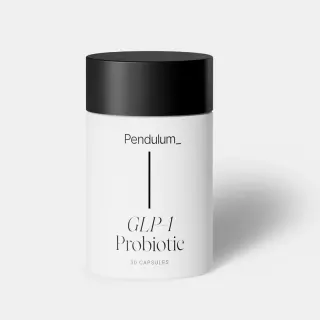
The authors labeled it a proof-of-concept exploratory study, which is the right label for 32 completers at one center. Pendulum is the product built on the idea, and it declares 500 million AFU across three strains with no per-strain breakdown, needs refrigeration, and runs $2.63 a serving. More in our Akkermansia review.
4. Glucomannan: a fullness tool wearing a gut-health label
Leanbean at 3 g and Lipozene at 1.5 g both run on glucomannan, which works by absorbing water and forming a viscous gel in the stomach. That's a satiety mechanism. It's a legitimate one, and it is not the same as feeding your microbiome, which is what most people mean when they shop this category.
Viscous gels also need real water intake to be used safely, which is a handling instruction rather than a footnote. Our glucomannan piece has the detail.
The dose ceiling nobody prints on the tub
Bonnema and colleagues tested chicory inulin fibers in 26 healthy adults in a randomized, double-blind crossover, scoring seven GI symptom domains at 0, 2, 4, 24 and 48 hours. Up to 10 g a day of native inulin and up to 5 g a day of the shorter-chain oligofructose were well tolerated. 10 g of oligofructose substantially increased symptoms against control, with flatulence the most common complaint, then bloating (Journal of the American Dietetic Association 2010).
Chain length decides tolerance, and it's rarely on the label. Two products can both say "chicory root fiber" and land very differently in your afternoon. We wrote about the consumer version of this problem in our piece on high-fiber low-sugar candy.
What none of this replaces
USDA food-survey data puts average US adult fiber intake around 16 grams a day against Adequate Intake targets of 25 for women and 38 for men. A 3.4 g serving of psyllium closes a fifth of that gap on a good day.
Every trial above layered a supplement on top of however people were already eating. None of them removed the diet and tested the powder on its own, which is also how it will work in your life. Our piece on whether fiber is the next protein covers the gap in more depth, and the gut-brain axis explainer covers why any of this reaches your appetite at all.
The verdict
Pick the measurement first, then the product.
If you want the outcome with the most human data behind it, psyllium, and expect a change in stool consistency rather than frequency. It's also the cheapest option here by an order of magnitude, which makes taking a real dose rather than a token one affordable.
If you specifically want to feed fermenting bacteria, a resistant-starch and beta-glucan blend is the right ingredient family, ramped slowly, with the caveat that a proprietary blend means you're trusting rather than checking, and that the dose-response evidence does not reward going bigger.
If you want a probiotic, buy it for a specific strain with a disclosed count and a specific reason. The best trial in this category improved metabolic markers and left the microbiome structure alone, and in healthy adults the pooled evidence says composition doesn't budge. That's worth knowing before you pay $2.63 a day for it.
Browse the rest of the fiber and satiety category for the full field.
References
Based on articles retrieved from PubMed, plus USDA dietary-survey data:
- Kristensen NB, Bryrup T, Allin KH, et al. Alterations in fecal microbiota composition by probiotic supplementation in healthy adults: a systematic review of randomized controlled trials. Genome Med. 2016;8(1):52. PMID 27159972
- Jalanka J, Major G, Murray K, et al. The Effect of Psyllium Husk on Intestinal Microbiota in Constipated Patients and Healthy Controls. Int J Mol Sci. 2019;20(2):433. PMID 30669509
- Yang C, Liu S, Li H, et al. The effects of psyllium husk on gut microbiota composition and function in chronically constipated women of reproductive age using 16S rRNA gene sequencing analysis. Aging (Albany NY). 2021;13(11):15366-15383. PMID 34081625
- Lai H, Li Y, He Y, et al. Effects of dietary fibers or probiotics on functional constipation symptoms and roles of gut microbiota: a double-blinded randomized placebo trial. Gut Microbes. 2023;15(1):2197837. PMID 37078654
- DeMartino P, Johnston EA, Petersen KS, et al. Additional Resistant Starch from One Potato Side Dish per Day Alters the Gut Microbiota but Not Fecal Short-Chain Fatty Acid Concentrations. Nutrients. 2022;14(3):721. PMID 35277080
- Costabile A, Deaville ER, Martin Morales A, Gibson GR. Prebiotic Potential of a Maize-Based Soluble Fibre and Impact of Dose on the Human Gut Microbiota. PLoS One. 2016;11(1):e0144457. PMID 26731113
- Depommier C, Everard A, Druart C, et al. Supplementation with Akkermansia muciniphila in overweight and obese human volunteers: a proof-of-concept exploratory study. Nat Med. 2019;25(7):1096-1103. PMID 31263284
- Bonnema AL, Kolberg LW, Thomas W, Slavin JL. Gastrointestinal tolerance of chicory inulin products. J Am Diet Assoc. 2010;110(6):865-868. PMID 20497775
- Hoy MK, Goldman JD. Fiber Intake of the U.S. Population. What We Eat in America, NHANES. USDA Agricultural Research Service, Food Surveys Research Group. USDA/NCBI
This article is for education only and isn't medical advice. Talk to your doctor before starting any supplement, especially if you're pregnant, nursing, taking medication, or managing a digestive or other health condition. Persistent changes in bowel habits are a reason to see a clinician, not a reason to buy a powder.
FAQ
Do probiotics actually change your gut bacteria?
In healthy adults, the evidence says mostly no. A systematic review of seven randomized controlled trials that sequenced fecal microbiota found no effect of probiotic supplementation on composition against placebo, with no change in diversity, richness or evenness, and only one trial showing a shift in overall community structure. Even the strongest single result in this category, a three-month Akkermansia muciniphila trial that improved insulin sensitivity, reported that the overall gut microbiome structure was unaffected.
Is psyllium or a probiotic better for regularity?
Psyllium has more human data, though the honest version is narrower than the marketing. Trials consistently show psyllium changing stool consistency and fecal water content. The largest one, 250 adults with functional constipation across five arms, found no group difference in bowel movement frequency or straining, with the improvement showing up on the Bristol stool scale instead. So expect a change in what your stool is like more than in how often you go.
How much fermentable fiber is too much?
It depends on the fiber's chain length, which labels rarely disclose. In a crossover trial in 26 healthy adults, up to 10 g a day of native chicory inulin and up to 5 g a day of the shorter-chain oligofructose were well tolerated, while 10 g of oligofructose substantially increased GI symptoms, most often flatulence and then bloating. Ramp slowly and treat any new fermentable fiber as a dose to build up to.
Does a bigger prebiotic dose feed more good bacteria?
Not reliably. A trial testing soluble corn fiber at 6, 12 and 18 g of fiber a day found the largest rise in bifidobacteria on the lowest dose. It was a small, short study, so it isn't the last word, but it runs directly against the assumption that a heavier scoop buys a bigger microbiome effect. A separate feeding study found resistant starch altering the microbiota while fecal short-chain fatty acid levels stayed flat, which is a reminder that a changed sequencer readout isn't automatically a benefit.
Products mentioned

Metamucil 4-in-1 Fiber (Psyllium Husk)
Metamucil (Procter & Gamble) · powderBest Value: cheap, drinkable, and well-evidenced as a fiber — but single-pathway and a heavy gel load.
Pennies per serving — by far the cheapest in the set.
Single pathway — a fiber, not a craving formula.

Supergut GLP-1 Daily Support
Supergut · powderA drinkable, gut-first option — but it leans on a proprietary fiber blend and a heavy fiber load.
Drinkable and caffeine-free.
Individual fiber doses are hidden inside a proprietary blend.
Pendulum GLP-1 Probiotic
Pendulum Therapeutics · capsuleStrong science pedigree on Akkermansia, but a proprietary CFU blend and refrigeration requirement.
Akkermansia has the strongest individual research pedigree of the probiotic actives.
Per-strain doses are hidden inside a proprietary blend.

Leanbean
Ultimate Life Ltd · capsuleA maximal glucomannan dose — which is also its risk: top-of-range fiber means you must take it carefully with plenty of water.
Glucomannan dosed at the full 3 g/day EFSA satiety level, fully disclosed.
At 3 g/day, glucomannan sits at the very top of the studied range — large glucomannan doses carry a documented risk of throat, esophageal, or GI blockage if not taken with enough water.