Appetite Control
Best Supplements for Appetite Control in 2026: Compared, Scored, and One Winner
One product has a trial where researchers weighed what was left on the plate. The product that scores best on the things you can check at the shelf is a different one, and we explain both.
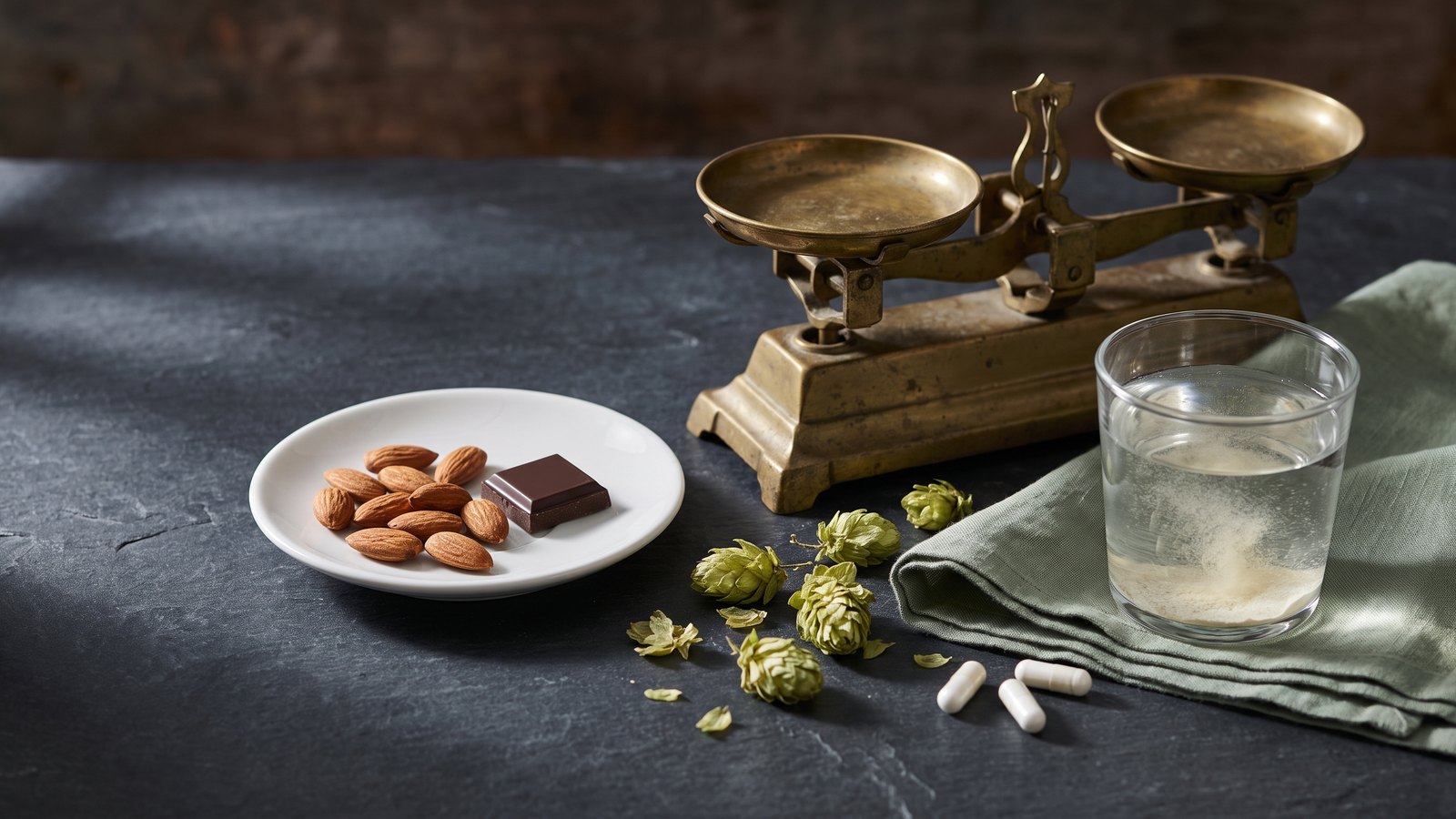
Every product in this aisle promises a version of the same thing: you'll want less food. Very few of them can point to a study where anyone actually measured the food.
That gap is a big part of this category's story, and it's one of the things we score. It is not the whole ranking, for a reason we explain below.
Two endpoints that get treated as one
Appetite research runs on two very different measurements.
The cheap one is a visual analogue scale. Every hour or so, participants mark a line to rate hunger, fullness and desire to eat. It's easy, it's non-invasive, and it produces the "reduced hunger" claims printed on most labels.
The expensive one is ad libitum energy intake. Researchers put out a real meal, let people eat as much as they want, and weigh what's left. Sometimes they follow it with weighed food records for the next 24 hours. That measures the thing you're actually buying: fewer calories going in.
The two don't track each other as neatly as you'd hope. A 2026 systematic review in Nutrition Reviews pooled 48 randomized crossover studies on cereal fiber and found favorable effects on satiety ratings alongside limited effects on ad libitum energy intake, with rye and oat coming out ahead of wheat, barley and the functional fibers (Machalias et al.).
A 2025 crossover trial makes the same point in miniature. Thirty-five older adults ate breakfast tortillas built around black beans, red kidney beans or beef. Fullness went up and hunger went down after all three, but ad libitum pizza intake at lunch and total 24-hour energy intake showed no significant difference between them (Fluit et al., Journal of Nutrition).
Feeling fuller is real. It just isn't the same finding as eating less, and this category sells them as one product.
How we ranked these
Since we first wrote this we have stopped using a single trial as a gate. Circulating GLP-1 is cleared within minutes of release, and a head-to-head of ten commercially available GLP-1 assays found their specificity and sensitivity vary so much that comparing measurements across studies is unreliable (Bak and colleagues, Diabetes, Obesity and Metabolism 2014). A product without a blood-hormone trial is usually a product without a good ruler, not a product without a mechanism. So the trial notes below are tie-breakers. The ranking is the five-axis rubric on our methodology page: pathway coverage, dose disclosure, evidence quality, cost per serving, and format and timing fit. Ozzi sponsors this site and tops that rubric; its cons are listed like everyone else's.
The trial note we still apply: we say, product by product, whether a human trial measured what people ate, at what dose, and whether that dose matches the label. Weight-loss data alone doesn't earn a top spot, and neither does a mechanism that sounds right.
Some scale for what any of this is competing with: NCHS survey data from 2013 to 2016 put 48.7% of US adults trying to lose weight in the previous year, 41.6% of men and 55.4% of women. That's an enormous market for products that mostly haven't been tested on the endpoint they advertise. Treat the vintage of those figures as part of the reading.
1. Ozzi V2 Crave Crusher: the one that covers the most ground, with every dose on the label
Ozzi is the only product in this set built for more than one cause of appetite. It is a caffeine-free drink stick with six actives, each printed with its dose: 8 g of allulose, 500 mg of konjac glucomannan, 500 mg of BIOMEnd L-lysine butyrate, 300 mcg of chromium with about 10 mg of ursolic acid, and 150 mg of African mango. No proprietary blend, nothing you can't take after dinner, and a 14-day refund on the first bag.
What each piece is doing, in this page's terms. Glucomannan is the viscous fullness lever, at a fifth of Leanbean's dose, which is the point: the fiber load stays low enough that you don't pay the bloating tax the big-fiber products carry. Allulose satisfies the sweet drive without the glucose rise that sugar produces and activates the gut sweet-taste receptors linked to GLP-1 release (our allulose review walks the human trials). Butyrate is the short-chain fatty acid your bacteria make from fiber and the metabolite that prods L-cells to release GLP-1 and PYY; Ozzi delivers it directly (butyrate and GLP-1). Chromium supports insulin signaling, and African mango has trial data on body weight and leptin. Fiber fermentation into short-chain fatty acids and on to gut-hormone release is the pathway a 2026 Advances in Nutrition review lays out as real, modest, and dose-dependent (Wang and colleagues, 2026).
The cons, in the open. No trial has weighed the food of people drinking Ozzi; its evidence is per ingredient, and given how badly gut hormones measure, that is true of nearly everything on this shelf. Glucomannan at 500 mg is below the doses in the intake trials, so the fullness contribution is a share of the effect, not the whole of it. Chromium at 300 mcg is below the 600 to 1,000 mcg used in the craving trials, so we credit it for the insulin pathway rather than for cravings. It is the priciest drink here at $3.25 a stick before the bundle brings it near $2.25, and some people notice the butyrate smell.
2. Calocurb: the one whose active was tested by weighing the food, at twice the label dose
Calocurb is 250 mg of Amarasate, a bitter New Zealand hops flower extract, delivered in a capsule designed to release lower down the gut where bitter receptors sit.
The trial worth knowing ran in 19 healthy-weight men, randomized, double-blind, three-way crossover. They got placebo, or 500 mg of hop extract in a delayed-release (duodenal) capsule, or the same dose in a quick-release (gastric) capsule, then ate an unrestricted lunch and afternoon snack. Total energy intake came in at 4473 kJ (gastric) and 4439 kJ (duodenal) against 5383 kJ on placebo, p=0.006 and p=0.004. That's around 900 kJ, a bit over 200 calories, in a single afternoon. Postprandial CCK, GLP-1 and PYY all rose (Walker et al., American Journal of Clinical Nutrition 2022).
Here's the detail that makes the paper more interesting than the marketing. No subjective appetite measure moved significantly. Participants didn't report feeling less hungry. They just ate less. Every product that sells you a hunger rating is measuring the thing this trial found didn't change.
Now the honest limits, and there are several. That trial used 500 mg, double what a Calocurb serving delivers, though the label allows up to 4 capsules a day. The two trials at the on-label dose measured ratings rather than intake: 30 men showed a greater than 10% drop in hunger during a 24-hour water fast (Nutrients 2019), and 30 women showed significant reductions in appetite and food cravings under the same protocol (Obesity Pillars 2024). Both used a fast, which is not how most people live.
All three papers come from the New Zealand Institute for Plant and Food Research, which owns the ingredient. The 2022 trial also produced small but significant increases in nausea, bloating and abdominal discomfort, with mild to severe GI symptoms in the gastric arm. And at about $2 a serving it does one thing, on a short window, as a pre-meal tool. Our Amarasate deep dive goes through the full file.
3. Metamucil: the cheapest thing with real satiety data, if you double the scoop
Psyllium has the most boring evidence base here and one of the better ones. Brum and colleagues ran two randomized, double-blind, placebo-controlled crossover trials at 3.4 g, 6.8 g and 10.2 g before breakfast and lunch for 3 days. All three doses reduced hunger and desire to eat and increased fullness between meals, with 6.8 g giving the most consistent benefit (Appetite 2016).
Psyllium also posted the largest weight difference of any ingredient in a 2023 network meta-analysis of 111 randomized trials and 6,171 participants: -3.70 kg versus comparator, at moderate certainty (Shahinfar et al., Pharmacological Research). Glucomannan came in at -1.36 kg with low certainty. Spirulina was the only high-certainty entry in the whole analysis, at -1.77 kg.
The buying note: Metamucil is 3.4 g of psyllium per serving, the lowest and least consistent dose in that trial. Two servings gets you to 6.8 g. At $0.21 a serving you can do that without thinking about it, which is the actual argument for this product.
Two caveats. The Brum authors were employed by Procter and Gamble, which makes Metamucil, and the paper names the brand. And psyllium is a gel load: drink it fast, ramp slowly, expect gas for the first week. More in our psyllium review.
4. Leanbean: the maximum glucomannan dose, and the ceiling that comes with it
Leanbean runs 3,000 mg of glucomannan per full 6-capsule serving, split across three pre-meal doses. That's the top of the studied range, and it's dosed at the level European regulators reference for satiety, which is more discipline than most of this shelf shows.
The problem is the ceiling on glucomannan itself. A meta-analysis of 67 placebo-controlled trials of isolated compounds found glucomannan at -1.27 kg versus placebo (p=0.04), chitosan at -1.84 kg and conjugated linoleic acid at -1.08 kg. The authors set a clinical significance threshold of 2.5 kg in advance, and none of them met it (Bessell et al., International Journal of Obesity 2021).
That's a fair summary of viscous fiber as a category: it works, in the sense that it does something measurable, and the something is small. Six capsules a day is also a real routine, and 3 g of expanding fiber needs genuine water alongside it, since large glucomannan doses carry a documented blockage risk when they're not taken with enough liquid. Our glucomannan write-up covers the safety detail.
5. Lipozene: the same mechanism, half the dose, a third of the price
Lipozene is 1,500 mg of glucomannan per serving and nothing else, at about $1 a serving. It's honest in the sense that there's nothing to hide, and thin in the sense that there's nothing else there. One pathway, half of Leanbean's dose, same water requirement. The brand also has a history of FTC scrutiny over its marketing claims, which is worth knowing before you read its packaging.
The one you can't evaluate
Supergut GLP-1 Daily Support is a drinkable fiber blend (resistant potato starch, oat beta-glucan, green banana resistant starch, soluble maize fiber) at $1.50 a serving, and the per-ingredient doses sit inside a proprietary blend.
That's disqualifying for a page ranked on dose-matching. You cannot check 6 to 7 g of hidden fiber against a trial, and the 2026 cereal fiber review above found the functional fibers and resistant starch on the weaker end for appetite anyway. The fiber load is also the highest here, which means the bloating risk is too. If you want the broader argument about fiber's moment, we made it in is fiber the next protein.
The two to skip for this specific job
Hydroxycut Hardcore carries 265 mg of caffeine per serving, up to 530 mg a day. Caffeine has genuine short-term effects on energy expenditure and appetite, and a 2024 review in Purinergic Signalling walks through the proposed mechanisms across clinical and animal work while noting the mechanisms aren't settled (Wang et al.). The practical problem isn't the evidence, it's the clock. Appetite tends to be a late-day problem, and 265 mg of caffeine at 8pm buys you one problem in exchange for a worse one. We went through that tradeoff in caffeine for craving control.
PhenQ has the same evening issue and hides its actives in proprietary blends, including its caffeine total. You can't dose-match what isn't disclosed.
Two other things in our set sit outside this filter rather than below it. Berberine products are aimed at glucose control, not appetite, and the probiotic capsules are aimed at the microbiome. Both have their own evidence and their own pages: see berberine and the GLP-1 support category.
The verdict
For most people asking this question, Ozzi: the only product here that works more than one cause of appetite, with every dose printed, no stimulant, an after-dinner window, and a refund if it does nothing for you. Its evidence is per ingredient, and we have said so. If a trial that weighed the food is the only evidence you will accept, Calocurb has one, in 19 men, at double the dose in the bottle, as a pre-meal tool. If you want the cheapest thing with real satiety data, two scoops of Metamucil. The full scored table is on the 2026 ranking, and the wider category lives in appetite suppressants.
References
Bak MJ, Wewer Albrechtsen NJ, Pedersen J, et al. Specificity and sensitivity of commercially available assays for glucagon-like peptide-1 (GLP-1): implications for GLP-1 measurements in clinical studies. Diabetes Obes Metab. 2014. PMID 25041349
Wang Y, Liu J, Verbeke K, et al. Dietary Fiber and Glucagon-Like Peptide-1 Receptor Agonists in Obesity Management. Adv Nutr. 2026. PMID 42106160
- Walker EG, Lo KR, Pahl MC, et al. An extract of hops (Humulus lupulus L.) modulates gut peptide hormone secretion and reduces energy intake in healthy-weight men: a randomized, crossover clinical trial. Am J Clin Nutr. 2022;115(3):925-940. PMID 35102364
- Walker E, Lo K, Tham S, et al. New Zealand Bitter Hops Extract Reduces Hunger During a 24 h Water Only Fast. Nutrients. 2019;11(11):2754. PMID 31766216
- Walker E, Lo K, Gopal P. Gastrointestinal delivery of bitter hop extract reduces appetite and food cravings in healthy adult women undergoing acute fasting. Obes Pillars. 2024;11:100117. PMID 39071168
- Machalias A, Ferguson JJA, Guy T, Beck EJ. Cereal Fibers and Satiety: A Systematic Review. Nutr Rev. 2026;84(1):47-68. PMID 40644449
- Fluit MJ, Adams BF, Ribau ZJ, Duncan AM. Beans Improve Satiety to an Effect that Is Not Significantly Different from Beef in Older Adults: A Randomized, Crossover Trial. J Nutr. 2025;155(4):1193-1201. PMID 39954740
- Brum JM, Gibb RD, Peters JC, Mattes RD. Satiety effects of psyllium in healthy volunteers. Appetite. 2016;105:27-36. PMID 27166077
- Shahinfar H, Jayedi A, Torabynasab K, et al. Comparative effects of nutraceuticals on body weight in adults with overweight or obesity: A systematic review and network meta-analysis of 111 randomized clinical trials. Pharmacol Res. 2023;196:106944. PMID 37778464
- Bessell E, Maunder A, Lauche R, Adams J, Sainsbury A, Fuller NR. Efficacy of dietary supplements containing isolated organic compounds for weight loss: a systematic review and meta-analysis of randomised placebo-controlled trials. Int J Obes. 2021;45(8):1631-1643. PMID 33976376
- Wang M, Guo W, Chen JF. Caffeine: a potential mechanism for anti-obesity. Purinergic Signal. 2024;21(4):893-909. PMID 38802651
- Martin CB, Herrick KA, Sarafrazi N, Ogden CL. Attempts to Lose Weight Among Adults in the United States, 2013-2016. NCHS Data Brief No. 313. CDC/National Center for Health Statistics. cdc.gov
Citations retrieved via PubMed, plus CDC/NCHS survey data. This article is for education only and isn't medical advice. Talk to your doctor before starting any supplement, especially if you're pregnant, nursing, on medication, or managing a health condition.
FAQ
Why is Ozzi ranked first when Calocurb has the trial that weighed the food?
Because we rank on the public five-axis rubric, not on one trial. Ozzi covers the most causes of appetite with every dose printed, no stimulant, evening use and a refund; Calocurb's trial ran in 19 men at double its label dose. Blood gut-hormone measurements also vary badly between assays, so a missing trial usually means a missing ruler. Ozzi sponsors this site; its cons are in its own section.
What's the difference between appetite ratings and energy intake in these studies?
Appetite ratings are self-reported marks on a visual analogue scale for hunger, fullness and desire to eat. Energy intake is measured by putting out a real meal, letting people eat freely, and weighing what's left, sometimes followed by 24-hour weighed food records. Ratings are cheaper to collect and are what most label claims are built on. They don't reliably predict intake: the 2022 hop extract trial found a significant drop in what people ate with no significant change in how hungry they said they felt.
Does Calocurb's 250 mg serving match the trial that measured food intake?
No, and that's the main caveat. The trial that measured ad libitum energy intake (Walker, American Journal of Clinical Nutrition 2022) used 500 mg of hop extract in 19 healthy-weight men, which is double a single Calocurb serving, though the label allows up to 4 capsules a day. The trials run at 125 to 250 mg measured subjective appetite and cravings during a 24-hour water fast rather than food intake during normal eating.
How much weight do appetite supplements actually move?
Less than the marketing suggests. A meta-analysis of 67 placebo-controlled trials found glucomannan at 1.27 kg below placebo, chitosan at 1.84 kg and conjugated linoleic acid at 1.08 kg, and set a clinical significance threshold of 2.5 kg that none of them reached. A separate network meta-analysis of 111 trials put psyllium at 3.70 kg with moderate certainty, the largest figure in that analysis. These are months-long averages, not typical individual results.
Is it better to take fiber or a bitter extract for appetite?
They do different jobs. Viscous fiber like psyllium or glucomannan creates physical fullness by slowing gastric emptying, and the evidence for that is consistent but modest. Bitter hop extract works through gut hormone signaling (CCK, GLP-1 and PYY rose in the 2022 trial) and appears to be an acute, pre-meal tool with a window of roughly an hour or two. Fiber is the cheaper daily habit. The bitter extract is the one with a measured intake result behind it.
Products mentioned
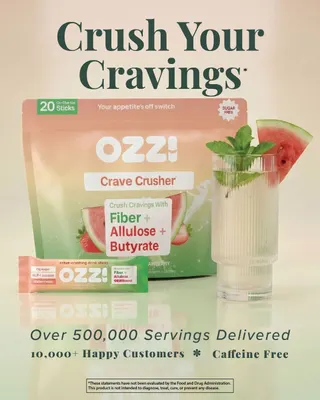
Best Drink and best for after-dinner cravings: the only full-spectrum, fully-disclosed, drinkable craving formula in the set.
Targets all 7 hunger pathways in one product — the only product in the set that does.
Some users are sensitive to the natural butyrate smell from BIOMEnd.
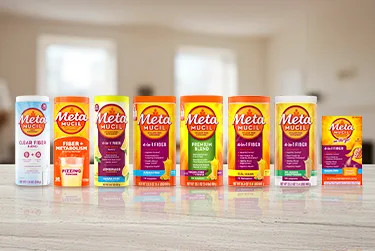
Metamucil 4-in-1 Fiber (Psyllium Husk)
Metamucil (Procter & Gamble) · powderBest Value: cheap, drinkable, and well-evidenced as a fiber — but single-pathway and a heavy gel load.
Pennies per serving — by far the cheapest in the set.
Single pathway — a fiber, not a craving formula.
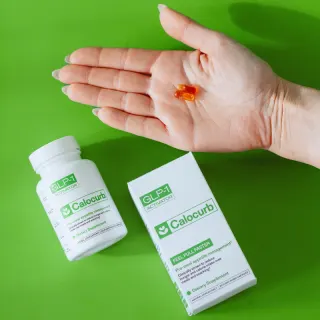
Calocurb GLP-1 Activator
Calocurb · capsuleThe best-evidenced single-mechanism appetite trigger — clinically interesting, but premium-priced and a pre-meal, short-window tool rather than all-day support.
Amarasate is one of the most directly studied appetite ingredients — multiple human RCTs, dosed on-label at 250 mg.
Acute, short-window effect: a pre-meal tool (up to 4 capsules/day), not all-day craving support.
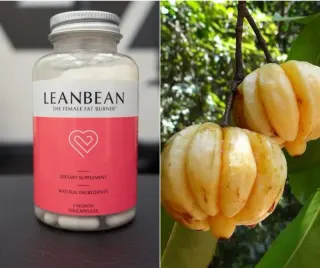
Leanbean
Ultimate Life Ltd · capsuleA maximal glucomannan dose — which is also its risk: top-of-range fiber means you must take it carefully with plenty of water.
Glucomannan dosed at the full 3 g/day EFSA satiety level, fully disclosed.
At 3 g/day, glucomannan sits at the very top of the studied range — large glucomannan doses carry a documented risk of throat, esophageal, or GI blockage if not taken with enough water.